
The Role of Docks in Enhancing Waterfront Property Value
Key Takeaways
- Docks boost Florida waterfront property value by 8–15%.
- Navigable water access adds $100K+ to resale gains.
- Installation costs range from $9K–$30K, with accessories as the most significant expense.
- FDEP permits are mandatory—non-compliance risks fines and resale issues.
- Composite and aluminum docks offer the best long-term value.
- Boat lifts and add-ons can increase home value by 15–25%.
Being a homeowner in Florida already feels like hitting the jackpot—sunshine, lifestyle, and substantial property demand. Now imagine owning a waterfront home, a scarce and valuable asset.
Waterfront properties appreciate at nearly double the pace of non‑waterfront homes, and the addition of a dock can unlock another 8–15% boost in value. Yet many owners overlook this opportunity, leaving equity untapped.
Here we’ll show how docks transform Florida lots into high‑demand investments, mixing everyday enjoyment with financial gain. From costs and permitting to design choices and ROI strategies, you’ll discover how to maximize your waterfront’s true potential.
The Economic Impact of Docks on Property Value
Installing a dock is more than a lifestyle upgrade. It’s a smart financial move. According to Market Data Forecast, the docks market is expected to grow at a CAGR of 3.58% by 2032. More people want easy access to water and outdoor living.
In Florida’s luxury neighbourhoods, this demand shows up in home prices. A dock can raise property value by 8–15%. For a $1 million home, that’s about $100,000 or more.
In Palm Beach communities like Lost Tree Village, Admiral’s Cove, and Frenchman’s Creek, buyers pay extra for homes with working docks. They don’t just want the view. They want direct access to the water.
Homes with navigable water access see the most significant gains. Research shows a functional dock can add $100,000+ to smaller lakefront homes. Non‑navigable properties usually see about half that increase.
Beyond Initial Value: Long‑Term Investment Returns
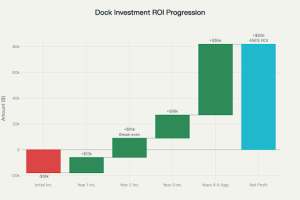
The benefits of dock ownership extend well beyond the initial premium:
- Market resilience: In South Florida, homes with docks appreciate faster and hold value better during market shifts.
- Ultra‑luxury demand: Waterfront estates valued at $5 million+ in Fort Lauderdale, Boca Raton, Delray Beach, and Palm Beach regularly exceed $10 million, with docks considered essential amenities.
- Ripple effect: Quality docks elevate not only individual homes but also surrounding neighbourhoods, driving up local property values and strengthening community markets.
Why This Matters for Homeowners
- Docks boost home resale value.
- They attract serious buyers who want water access.
- They add long‑term stability in competitive markets.
- Florida’s Blue Economy contributes billions, making docks a wise investment.
- For Palm Beach and Martin County, docks mean both financial ROI and lifestyle enjoyment.
3. Understanding Dock Installation Costs in Florida
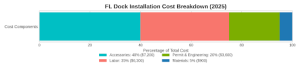
The hidden fees like saltwater-proofing, strict permits, and expert builds can surprise you. In Palm Beach and Martin County, homeowners typically spend $9,000–$30,000 for a standard residential dock.
Here’s how that breaks down:
| Cost Component | % of Total Cost | Estimated Cost |
|---|---|---|
| Accessories | 40% | $7,200 |
| Labor | 35% | $6,300 |
| Permit & Engineering | 20% | $3,600 |
| Materials | 5% | $900 |
Florida-Specific Dock Permitting & Regulatory Requirements
The Florida Department of Environmental Protection (FDEP) oversees dock construction through its Environmental Resource Permit (ERP) program.
- Exempt permits: For small, non-commercial docks under 500 sq ft.
- General permits: For mid-sized docks with limited environmental impact.
- Individual permits: Required for larger or complex projects.
Aquatic Preserve Design Standards
Premium waterfront communities often fall within aquatic preserves, requiring stricter design standards:
- Elevated walkways to protect seagrass.
- Light-transmitting decking to minimize shading.
- Limits on dock length and width.
Importance of Compliance & Consequences of Violations
Ignoring permitting rules can lead to:
- Fines and penalties from FDEP.
- Project delays or forced removal of non-compliant structures.
- Resale complications, since non-permitted docks can block property transactions.
Material Choices and Long-Term Value
Florida’s salt and sun are brutal. Pick the wrong dock material? It rots fast and drains your wallet. Pick smart? You save money, enjoy stress‑free weekends, and even sell your home for top dollar. Here’s the simple scoop for Palm Beach and Martin County homeowners:
Quick Pros & Cons Table
| Material | Good Stuff | Not-So-Good Stuff | How Long Does It Last | Yearly Upkeep Cost |
|---|---|---|---|---|
| Treated Wood | Cheap to buy; cozy look; easy fixes | Needs paint/seal often; salt eats it; bugs win | 8–15 years | High ($300–$600/year) |
| Composite | Fights rot & bugs; easy clean; super strong | Costs more up front; gets hot in the sun | 25–35 years | Low ($50–$100/year) |
| Aluminum | Never rusts; light & tough; no work needed | Plain look; can be slippery; highest price | 30–50 years | Almost nothing ($20–$50/year) |
Florida Musts:
- Use salt‑proof pine (UC4B treated) or hardwoods like Ipe.
- Wrap posts in vinyl to block water intrusion.
- Skip “green” treatments—they fade fast here.
- Go composite if you want the pay once, chill forever option.
Add Boat Lifts & Extras: Turn Your Dock Into a Dream Spot
Plain dock? Meh. Add lifts and extras? Boom—your home’s value can jump 15–25%. Boats stay safe, you get easy fun, and no more storm stress.
Boat Lift Basics
| Lift Style | Boat Weight It Holds | Price Range | Best For |
|---|---|---|---|
| Cantilever | 1K–6K lbs | $2K–$6K | Calm, shallow spots |
| Vertical | 3K–15K lbs | $5K–$15K | Up-and-down tides |
| Hydraulic | 5K–25K+ lbs | $10K–$25K+ | Heavy yachts |
| Floating | 2K–12K lbs | $5K–$12K | Soft, mucky floors |
Extra Cost: $1K–$5K to hook up power. Big Perk: Cuts boat repair bills in half and attracts serious buyers.
Top Add‑Ons for Easy & Pretty
- Bumpers & Ties ($500–$2K): Stop boat bumps, save repair bucks.
- Lights ($200–$2K): Glow for safe night fun; solar keeps it green.
- Rails & Ramps ($2K–$5K): Safe steps, ADA‑friendly.
- Power/Shade ($300–$8K): Outlets for music and party shade covers.
Pros vs. DIY: Why Pay for Experts
DIY sounds cheap, but in Florida, it backfires with fines, breaks, and resale headaches.
DIY Traps
- Rule Breaks: Miss permits = $1K–$25K fines + forced removal.
- Danger Zone: Bad builds = slips, sink risks, lawsuits.
- Break City: Wrong posts = $15K–$40K quick‑fix nightmare.
- Sell Stink: Buyers cut price 20% or walk away.
Professional Wins
- Permit Magic: Approvals handled fast.
- Promise Protection: 5–10 year warranties.
- Safe Shield: Liability coverage included.
- Top Build: Engineered for your shoreline’s waves and spill.
Your Dock Build Timeline
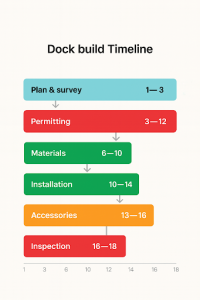
Dock projects take 1–18 months, depending on permits and weather. Pros keep it moving.
Conclusion
Adding a dock to your Florida waterfront property isn’t just smart—it’s strategic. It boosts resale value, attracts premium buyers, and enhances lifestyle. With proper permits, durable materials, and expert installation, your dock becomes a long-term asset. From costs and compliance to accessories and ROI, this guide answers every key question.
Ready to build equity and enjoy the water? Marine Construction Inc. brings 35+ years of trusted expertise to your shoreline.
Frequently Asked Questions
- How much does it cost to build a dock in Florida?
Most residential docks in Palm Beach and Martin County range from $9,000 to $30,000, depending on size, materials, permits, and accessories. Premium builds with lifts and lighting can exceed $50,000.
- Do I need a permit to build a dock?
Yes. The Florida Department of Environmental Protection (FDEP) requires permits for most docks. Small, non-commercial docks may qualify for exempt or general permits, while larger or complex builds need individual permits.
- Which dock material lasts longest in Florida’s saltwater climate?
Aluminum and composite docks offer the best durability—lasting 30–50 years with minimal upkeep. Wood docks are cheaper but require frequent sealing and repairs.
- Will a dock increase my home’s value?
Absolutely. A well-built dock can boost property value by 8–15%, and even more with boat lifts and accessories. Homes with navigable water access see the highest returns.

Marine construction shapes vibrant waterfront living—whether you’re picturing a small residential dock or a robust seawall protecting entire…